Feeling strong does not answer every bone-health question
Walking comfortably and having no pain do not establish that bones are strong. Osteoporosis can be silent until a fracture occurs. A useful prevention conversation connects personal history, risk factors and appropriate assessment, while keeping food, activity and any treatment within an individualized plan.
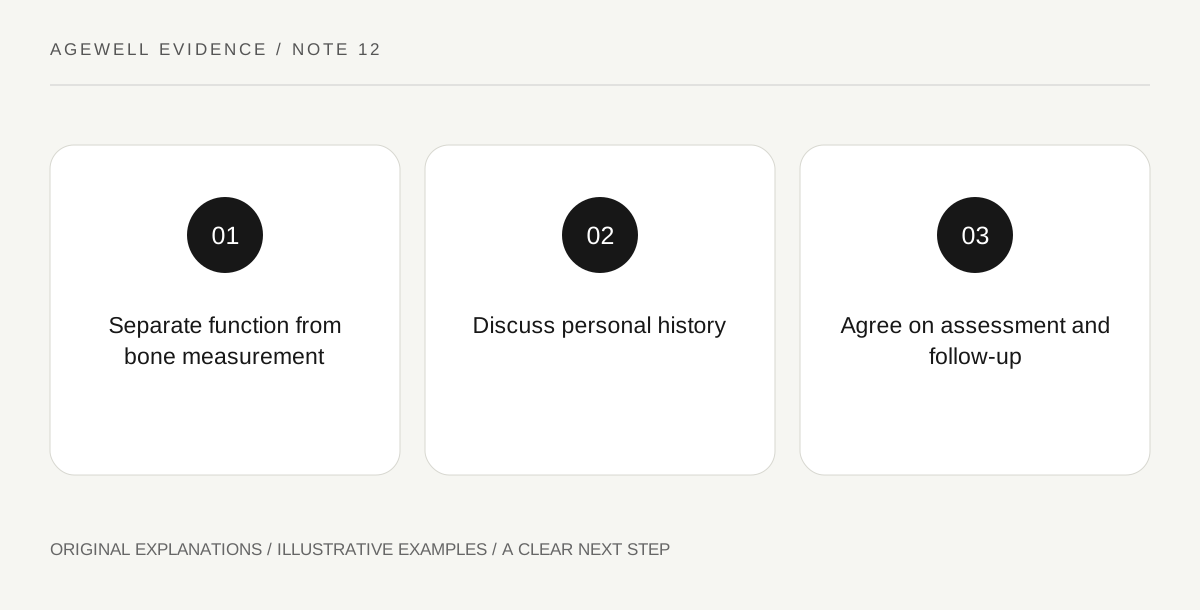
Original explanatory diagram. Read the full method and limitations below.
Separate muscle performance from bone assessment
Being able to lift groceries tells you something about that task. It does not directly measure bone mineral density or fracture risk. NIAMS explains that osteoporosis often has no obvious symptoms before a fracture. Avoid using how young you feel, body shape or a successful fitness session as a substitute for discussing bone health.
The reverse is also important: concern about bones should not lead you to stop all movement without advice. Ask which activities are appropriate for your circumstances, particularly after a fracture or with a diagnosed condition. An article cannot determine a safe loading plan from your age alone. Keep functional goals visible while obtaining the assessment you need.
Bring history that changes the conversation
Tell the clinician about fractures, falls, family history and relevant medicines or health conditions. Explain how an injury happened rather than simply recording that a bone broke. A low-height fall and a high-speed collision provide different context. Do not assume that an old fracture no longer matters because the immediate pain resolved.
Bring existing test reports if you have them and ask what they mean for your current situation. Avoid comparing a number with a friend's result without knowing the test, site or clinical context. Your question can be simple: 'Given my history, should bone health be assessed, and what would the result change?' That invites a decision rather than a test purchased without a clear purpose.
Discuss food without a supplement shortcut
Calcium, vitamin D and overall nutrition are relevant to bone health, but a general article cannot determine whether you need a supplement or a particular dose. Describe your usual foods, dietary restrictions and any products already taken. Ask a clinician or dietitian how those fit your needs and existing health conditions.
Do not stack several bone products because their front labels use different names. Bring the actual ingredients and amounts to a professional review. A supplement does not establish that a fracture risk has been addressed, and more is not automatically better. A realistic food plan should also consider access, appetite and the ability to prepare and chew meals.
Connect assessment with a follow-through plan
Ask what happens after a test or diagnosis: who explains the result, what options are being considered and when review is needed. If a medicine is recommended, ask about the intended benefit, directions, risks and how to report problems. Do not start, stop or substitute treatment based on an advertisement for a supposedly natural alternative.
Home falls prevention and bone care address related but different issues. A clear walking route can reduce a hazard, while assessment addresses what could happen if a fall occurs. Keep both in view without promising that either eliminates fractures. The useful outcome of the conversation is a plan you understand and can carry out, with a named next step.
An illustrative prevention question
Helen walks daily and feels fit, but mentions a previous wrist fracture after a minor fall. She asks her clinician whether that history changes her bone-health assessment needs. She brings her supplements and ordinary food pattern. Her walking habit remains valuable without being treated as proof that testing or review is unnecessary.
Practical checks
Optional checkboxes save only in this browser.
Questions that come up
Can men develop osteoporosis?
Yes. Bone health is relevant to men as well as women. Individual history and risk factors matter, so avoid assuming the issue belongs only to one group.
Does lack of pain prove bones are healthy?
No. Osteoporosis can be silent. Discuss personal assessment needs with a qualified professional rather than using pain as the only signal.
References and scope
These sources support the factual background. Examples and exercises are original illustrative teaching material. References do not imply endorsement.
- NIAMS: Osteoporosis — Bone strength, fracture risk and the often silent nature of osteoporosis.