Make a medicine list that helps a pharmacist spot unanswered questions
A useful medicine list includes more than prescription names copied from memory. It shows what you actually take, including over-the-counter products and supplements, so a professional can review the whole picture. The purpose is accurate communication; a shorter list is not automatically safer, and this exercise never authorizes stopping treatment.
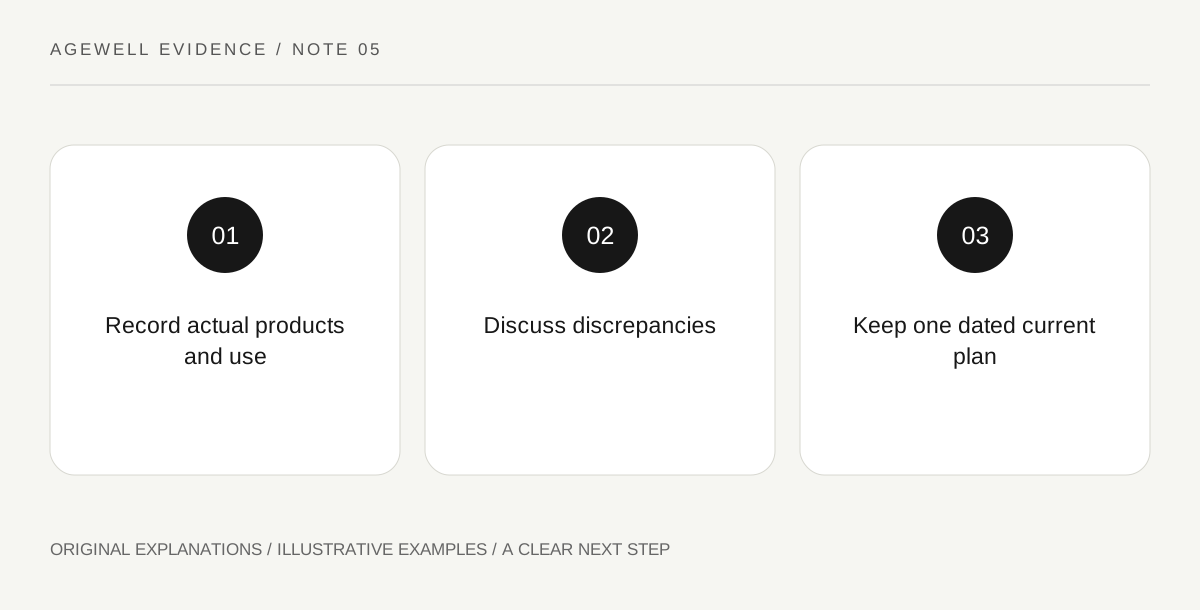
Original explanatory diagram. Read the full method and limitations below.
Describe actual use clearly
For each product, record its complete name, strength, amount used and timing. Include medicines taken only when needed, inhalers, creams and supplements rather than assuming they are too minor to count. Keep the label available when a name is uncertain. Two packages with similar branding can contain different active ingredients.
Make uncertainty visible. If you are unsure whether an old bottle is still part of the plan, put it in a question category rather than guessing a schedule. Distinguish what a clinician prescribed from what you currently do. An honest description of missed doses or difficult packaging helps the professional address the real situation without a false picture of perfect adherence.
Connect each item to a question
If you know the purpose, write it in ordinary language. If you do not, ask. A list becomes more useful when it leads to questions such as whether two products overlap, whether a medicine should be taken with food or what to do when a dose is missed. Answers depend on the specific product and person.
Do not create a universal rule from a friend's instructions. One person's medicine timing, alcohol restriction or missed-dose advice may not apply to yours. Ask the pharmacist to explain the exact label and request written information when needed. Keep any agreed change linked to who recommended it and when, so an older version of the list does not quietly return.
Include practical barriers
Tell the professional if a cap is hard to open, tablets are hard to swallow, print is unreadable or the routine conflicts with daily life. These are care questions, not signs that you are failing at organization. Ask about appropriate alternatives without crushing, splitting or transferring medicines in ways the pharmacist has not approved.
Discuss how reminders or a medication organizer would fit the actual products. Some storage requirements may make a single generic box unsuitable. If several people help, agree who updates the list and how they check for changes. Avoid two helpers independently adding doses because each assumes the other forgot. Keep medicines securely stored and follow professional storage instructions.
Use the review to resolve discrepancies
Bring the list and, when practical, the packages to a pharmacist or clinician. Ask them to compare the current plan with what you have recorded. NIA advises consultation before starting a new medicine or supplement and before reducing or stopping medicines. Review is a conversation about benefits, risks and needs, not an instruction to remove as many items as possible.
Afterward, retain one clearly dated current version and archive superseded copies. Share it with the relevant care team and a trusted supporter if you choose. Carry an accessible version when attending appointments. A list cannot prevent every interaction or error, but it gives professionals a better starting point than a vague statement that you take only the usual tablets.
An illustrative list discrepancy
Mara lists her prescriptions and an occasional nighttime product. She brings both packages to the pharmacist, who can review the actual ingredients and her questions. Mara asks for a readable explanation of the agreed plan. She does not stop the prescription or add a second sleep product while waiting for the review.
Practical checks
Optional checkboxes save only in this browser.
Questions that come up
Are supplements separate from the medicine list?
Include them so the professional sees the complete picture. A product sold as natural can still be relevant to interactions, side effects or duplication.
Should the goal be taking no medicines?
The goal is an appropriate plan for your needs. Some medicines provide important benefits. Any reduction or discontinuation should be discussed with the prescribing professional.
References and scope
These sources support the factual background. Examples and exercises are original illustrative teaching material. References do not imply endorsement.
- NIA: Taking Medicines Safely as You Age — Medication lists, supplements, pharmacist questions and supervised medication review.