Review alcohol alongside medicines and daily tasks as you age
A familiar drinking pattern may need a fresh conversation when health, medicines or daily responsibilities change. The useful question is personal risk and function, rather than whether a particular drink has a wellness reputation. Alcohol is not a healthy-aging treatment, and general guidance cannot determine what is safe for every individual.
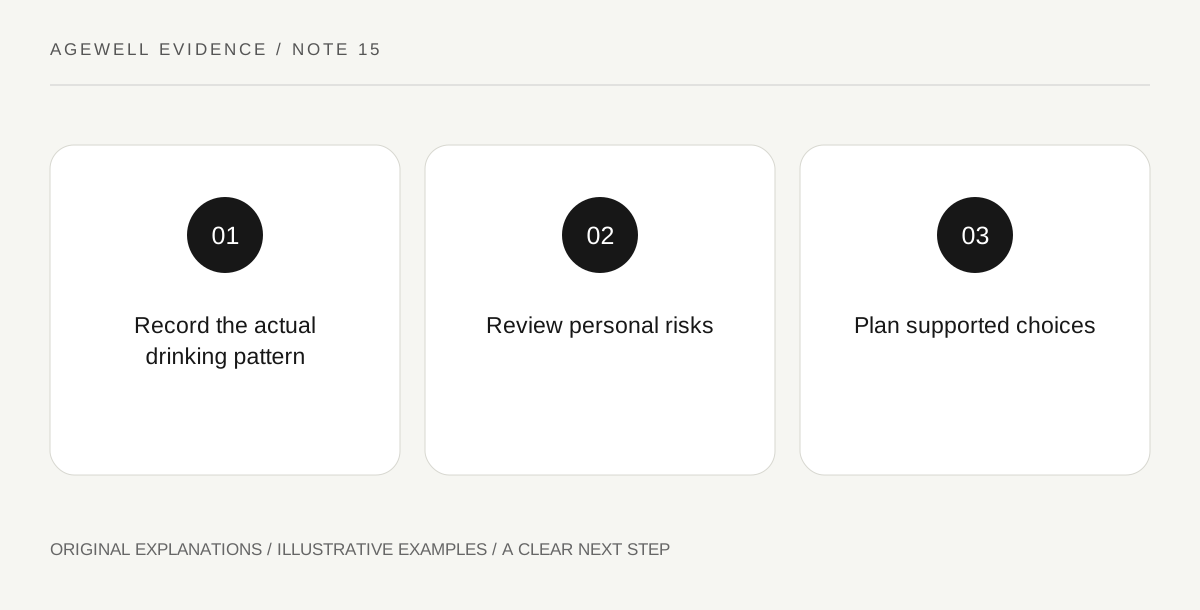
Original explanatory diagram. Read the full method and limitations below.
Describe actual occasions and amounts
Tell the clinician or pharmacist what you drink, how much and when. A home pour, a restaurant glass and a mixed drink may contain different amounts, so be as concrete as possible. Do not translate an uncertain large pour into one standard drink merely because it fits one glass. Product strength and serving size both matter.
Include alcohol used as part of a sleep routine, social event or cooking-and-tasting habit if relevant. An accurate conversation does not require a moral label. Ask for help interpreting standard-drink information in your country. The goal is to understand exposure and circumstances, not to produce the smallest-looking number on a form.
Bring medicines and health changes into the same discussion
NIA explains that aging, health conditions and medicines can change alcohol-related risks. Ask about your actual prescriptions, occasional pain or sleep products and supplements. Do not assume that spacing a drink a little farther from a tablet makes a combination safe. The answer depends on the particular product and situation.
Mention falls, balance concerns, memory changes or trouble sleeping rather than treating drinking as an isolated lifestyle topic. Ask whether avoiding alcohol is advised for your circumstances. Do not stop a prescribed medicine to make room for drinking. If dependence or withdrawal is a possibility, seek professional help before making abrupt changes; stopping suddenly can be dangerous for some people.
Plan the event around the activity you want
If your goal is conversation, a meal or a celebration, choose arrangements that allow participation without making alcohol the entry ticket. Offer appealing nonalcoholic choices and avoid pressuring guests to explain why they decline. Consider transport and any tasks requiring alertness before the event begins.
A household can agree that nobody makes jokes about a changed choice or keeps refilling a glass without asking. The person may prefer a smaller gathering, an earlier meal or a different drink. These are social design choices, not a public declaration about health. A practical plan should respect privacy while making the preferred option easy.
Use follow-up to solve the real problem
If alcohol has become a way to cope with poor sleep, loneliness, pain or stress, bring that need to the care conversation. Replacing the drink without addressing the problem may leave the person unsupported. Ask what resources or treatments are appropriate and how to contact help if changing the pattern is difficult.
Review outcomes in functional terms: safer transport, a clearer medicine plan or a social event that felt comfortable. Avoid treating a branded alcohol-free product as a medical intervention, and check its label if ingredients matter to you. The useful endpoint is an informed, feasible decision tied to personal care and daily life rather than a promise of longer life from a beverage.
An illustrative celebration plan
After starting a new medicine, Grace asks her pharmacist about alcohol before a family dinner. She chooses a nonalcoholic drink for the occasion and arranges transport. Her family keeps the choice ordinary. She separately discusses persistent sleep difficulty with her clinician instead of using an evening drink as her main solution.
Practical checks
Optional checkboxes save only in this browser.
Questions that come up
Is wine a treatment for healthy aging?
Do not start drinking for a promised anti-aging benefit. Discuss alcohol in the context of personal health, medicines and current official guidance.
Can I skip a medicine when I want a drink?
Do not change prescribed treatment for that reason. Ask the prescriber or pharmacist about the specific interaction and the appropriate plan.
References and scope
These sources support the factual background. Examples and exercises are original illustrative teaching material. References do not imply endorsement.
- NIA: Facts About Aging and Alcohol — Alcohol effects, medicine interactions and reasons to discuss drinking with clinicians.