Discuss bladder symptoms without letting them quietly shrink your day
Repeatedly declining outings because of bathroom worries can make a private symptom into a larger access problem. A practical outing plan may help today, while a health conversation addresses the symptom itself. Leakage and urgency are reasons to seek advice, rather than something everyone must simply accept with age.
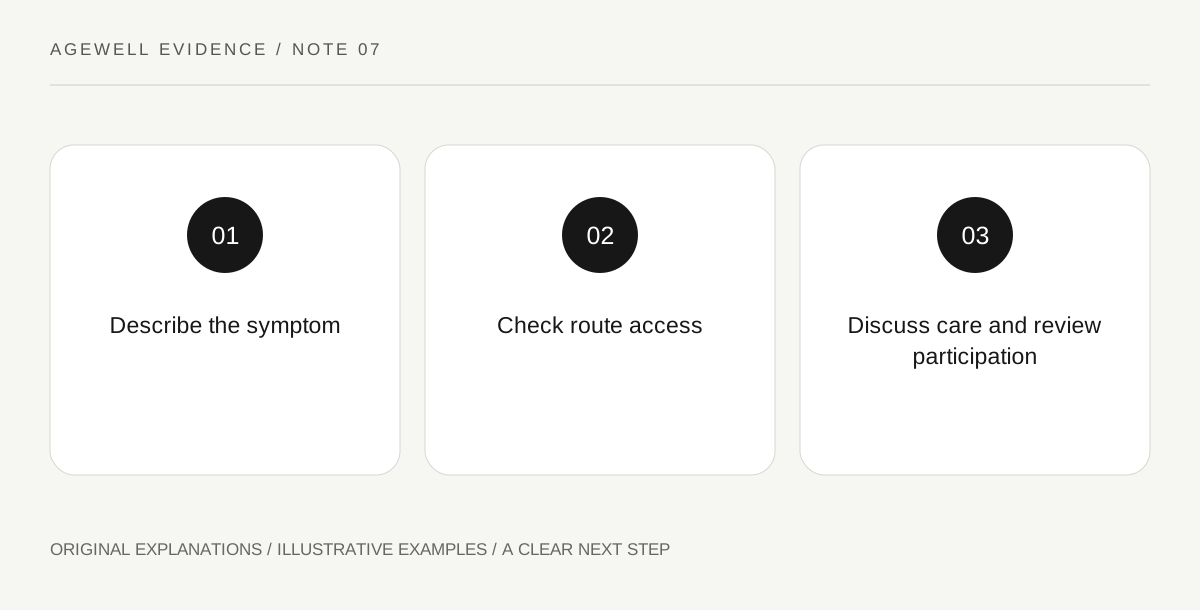
Original explanatory diagram. Read the full method and limitations below.
Describe the pattern without diagnosing it
Write what happens in ordinary language: sudden urgency on the bus, leakage with a particular activity or waking to use the bathroom. Include when it began, how often it disrupts your day and any associated symptoms. Keep a short record if your clinician suggests one, but do not delay seeking help in order to produce a perfect diary.
Avoid labeling every change as an overactive bladder, infection or inevitable aging. Several causes are possible and assessment matters. Seek timely medical advice for a new or concerning symptom, especially pain, blood in the urine, fever or difficulty passing urine. A website cannot decide the cause from an outing story or recommend the right treatment.
Map access before an outing
Choose a destination with reliable toilet access and check whether facilities are accessible for you. Consider the entire route, including waiting time, transfers and the walk from a parking area. A toilet icon on a map does not tell you whether a door is locked, a lift works or a queue is likely.
Make a discreet backup plan with a companion if you want one. Agree that asking to stop is an ordinary logistics request. Pack personal supplies in a way that is easy to manage and dispose of appropriately. The purpose is to make participation more comfortable while care is arranged, without turning every outing into an exhausting search for perfect certainty.
Keep food and fluid decisions out of guesswork
Avoid cutting fluids drastically to get through an event. Personal health conditions, medicines and clinician advice affect what is appropriate. If a drink seems related to symptoms, describe the observation to your professional rather than imposing a broad ban on yourself from a single experience. A useful note records timing and context without claiming causation.
Ask about existing medicines and any nonprescription products you are considering. Do not borrow a bladder medicine or assume an advertised product is suitable because it is sold without a prescription. Treatment choices can have meaningful benefits and risks. The care conversation should include the daily activity you want to regain, not only a tally of symptoms.
Judge progress by participation as well as symptoms
A treatment or access plan is more useful when it connects to a concrete goal, such as attending a class or visiting a friend. Ask what follow-up is appropriate and what changes should be reported. Keep the clinician informed if an arrangement is ineffective or causes unwanted effects instead of silently abandoning it.
Supporters can help by finding accessible venues, allowing flexible timing and protecting privacy. Avoid teasing, public reminders or speaking for the person without consent. If an outing remains too demanding, choose a shorter or more accessible alternative while continuing care. An adjusted activity can preserve connection without presenting the symptom as a personal failure.
An illustrative museum visit
Elaine has stopped joining museum trips because she worries about urgency. She contacts the venue about accessible toilets and plans a shorter visit with a friend. Separately, she books an appointment and describes when the symptom began. The route plan supports the visit; it does not diagnose or treat the bladder problem.
Practical checks
Optional checkboxes save only in this browser.
Questions that come up
Is leakage just a normal price of getting older?
It is common but should not automatically be dismissed. A health professional can assess causes and discuss appropriate options.
Should I avoid drinking all morning before travel?
Do not use severe fluid restriction as a general solution. Ask your clinician about your needs and plan access and timing around appropriate individual advice.
References and scope
These sources support the factual background. Examples and exercises are original illustrative teaching material. References do not imply endorsement.
- NIA: Urinary Incontinence in Older Adults — Bladder symptoms, evaluation and treatment discussions.