Explain persistent fatigue through the activities it interrupts
Persistent fatigue is easier to discuss when you describe the activities that changed instead of saying only that you feel older. A short functional account can help a clinician investigate. Fatigue has many possible causes, so an energy supplement or a stricter schedule should not substitute for assessment.
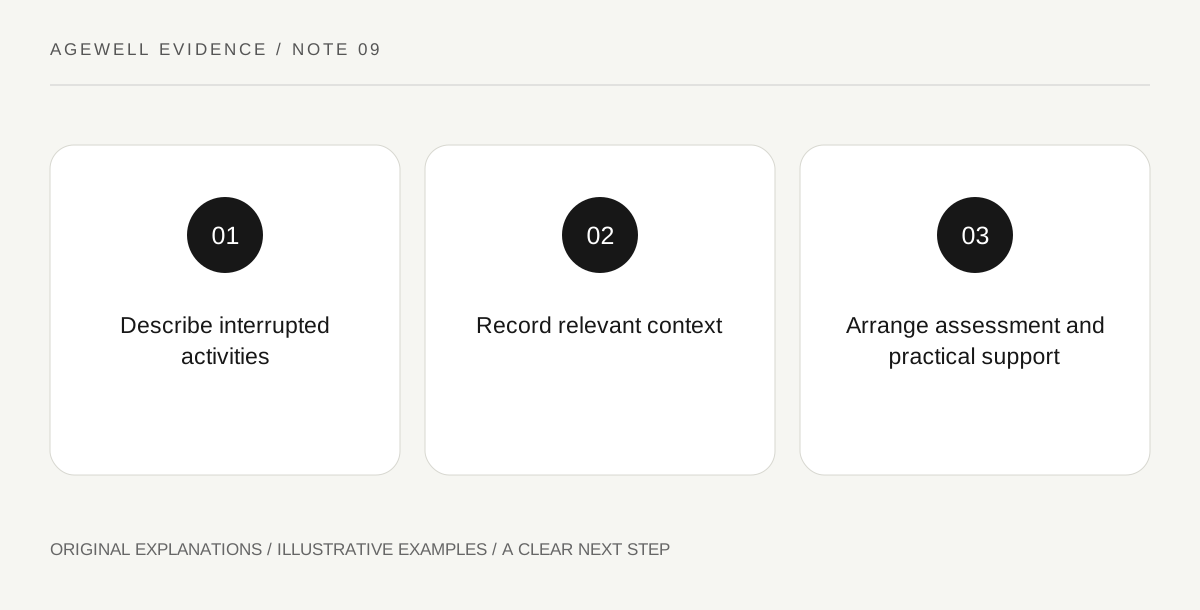
Original explanatory diagram. Read the full method and limitations below.
Distinguish a tired day from a persistent change
Think about your usual pattern and what is different now. Is fatigue present after an unusually demanding day, or does it continue across ordinary days? NIA recommends discussing ongoing unexplained low energy with a health professional. Do not decide that age explains it merely because friends use the same description.
Choose a few examples that show the effect: needing to stop during grocery shopping, being unable to prepare dinner after work or cancelling a familiar activity. Include when the change began and whether rest helps. This is a communication aid, not a diagnostic scale. Avoid inventing a numerical threshold that determines whether your concern deserves attention.
Record context without turning life into a test
A brief note can include sleep, activity, appetite, recent illness, pain and medicine changes. Write what happened rather than interpreting every entry. 'Felt exhausted after showering on Tuesday' is clearer than 'my metabolism failed.' Keep the record short enough to use, and seek care without waiting for a complete week if symptoms are concerning.
Do not deliberately push through an exhausting task to measure your limit. A task that feels manageable for one person may be inappropriate for another. If new chest pain, severe breathlessness, fainting or another urgent symptom occurs, seek urgent help. An online fatigue diary should never become a reason to delay care or prove that you are sufficiently unwell.
Bring the whole routine to the conversation
Include prescribed medicines, occasional products, alcohol and supplements. Ask whether relevant conditions or treatments could contribute and what evaluation is appropriate. NIA describes several medical, emotional and lifestyle contributors; the list is a reason to investigate, not a menu for self-diagnosis. Do not stop treatment to see whether energy improves.
Explain the goal that matters most, such as getting through a work shift or preparing a meal. Ask what activities are appropriate while the concern is assessed and what changes should prompt earlier contact. If written information is hard to follow, request a clear next-step note. A practical plan should tell you what happens after the appointment.
Reduce avoidable demands while the question is addressed
Look for ways to make essential tasks less draining without imposing a universal exercise or rest prescription. A delivery, a seated preparation task or help with heavy laundry may be useful. Discuss activity with the relevant professional if a condition or symptoms affect what is appropriate. Accepting help does not determine the medical cause.
Review whether the adjustment preserves the task you care about. If a simpler dinner lets you eat regularly while care is arranged, that is useful. Do not label a temporary workaround a cure, and do not blame yourself if ordinary organization changes fail to resolve fatigue. Continue follow-up when the symptom persists or the agreed plan is not working.
An illustrative appointment note
Paul notices that a normal grocery trip now leaves him unable to cook. He writes when this began, what else changed and which medicines he takes. He arranges a medical appointment and uses a delivery option for heavy shopping meanwhile. He does not start a stimulant supplement or push through a long walk to test himself.
Practical checks
Optional checkboxes save only in this browser.
Questions that come up
Does persistent fatigue always mean serious illness?
No single explanation follows from the symptom. It can have many causes, which is why persistent or unexplained fatigue deserves a professional assessment rather than an assumption.
Should I buy an energy supplement first?
Do not let a purchase delay evaluation. Discuss any proposed product with a clinician or pharmacist, especially when you take medicines or have a health condition.
References and scope
These sources support the factual background. Examples and exercises are original illustrative teaching material. References do not imply endorsement.
- NIA: Fatigue in Older Adults — Fatigue has multiple possible causes and persistent fatigue deserves evaluation.