Map vision changes by daily task before choosing another pair of glasses
A small print problem, glare outside and difficulty finding a step are different experiences. Describing them separately makes an eye-care conversation more useful. Everyday lighting adjustments may help you function, but comfortable reading or a new pair of glasses cannot establish that the eyes are otherwise healthy.
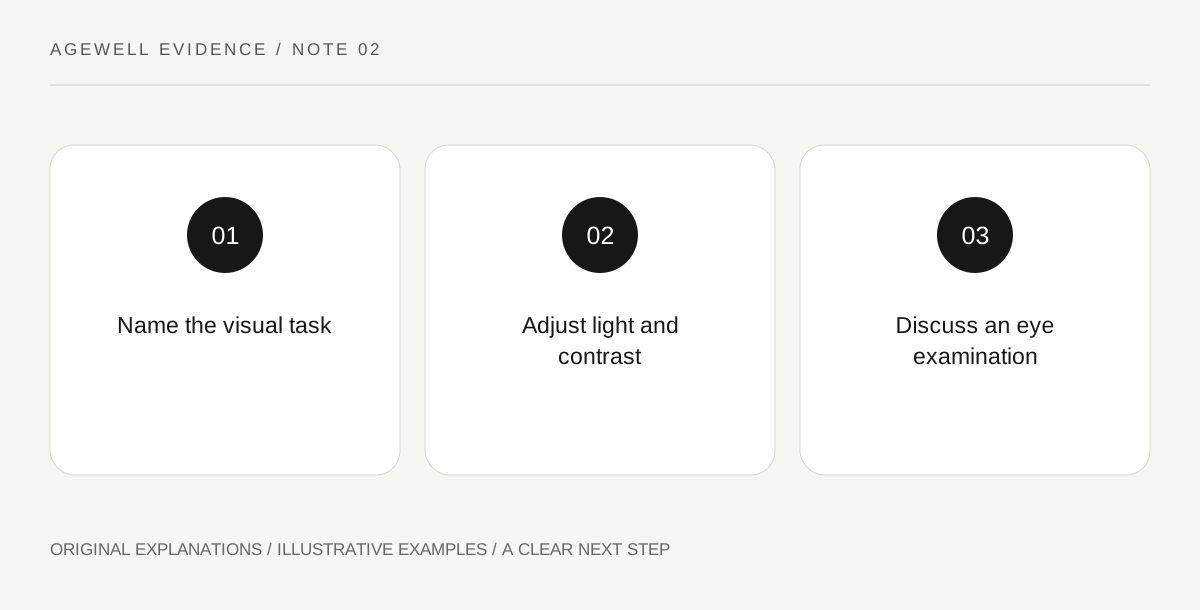
Original explanatory diagram. Read the full method and limitations below.
Describe near, far and changing light
Write which task is affected: reading a label, recognizing a bus number, moving from a bright street into a hallway or seeing a stair edge. Include whether the issue is new and whether it occurs with your usual glasses. Keep 'blurred close text' separate from 'bright light is uncomfortable,' because a single vague complaint can hide several problems.
Use actual examples instead of a homemade vision score. You might bring the medicine packaging you struggle to read or explain the glare at a particular workstation. Do not repeatedly test your sight by driving a difficult route or trying to navigate a dark staircase. Observation should come from ordinary safe activity, not a challenge created to prove a limitation.
Improve visibility where the work happens
Look at light direction, contrast and clutter. A reading lamp directed toward the page may serve a different purpose from overhead room lighting. Labels can be moved into a more readable position, and a clear place for keys can reduce searching among similar objects. Avoid creating reflections with a bright lamp aimed at a glossy screen.
Try one environmental adjustment at a time and judge the task it is meant to help. If a larger phone font improves messages, that is useful even while you arrange an eye examination. It does not tell you why vision changed. Similarly, purchasing brighter bulbs for every room may create glare without improving the particular surface you need to see.
Keep eye examinations distinct from shopping
An eye-care professional can assess more than whether a lens makes text sharper. NIH explains that some important eye diseases may have few early symptoms. Ask what type of examination is appropriate for your history and when follow-up is needed. Bring existing glasses, medicine details and relevant health history rather than guessing the examination's scope from an advertisement.
If a prescription changes, ask which activities the glasses are intended for. Reading glasses, distance correction and other arrangements have different uses. Discuss practical concerns such as stairs or changing focus with the professional who assessed you. This article cannot select a lens, set a universal examination interval or determine whether it is safe for you to drive.
Build a usable follow-up note
After the appointment, record the next step in ordinary terms: which glasses for which task, an agreed follow-up date and whom to contact if problems persist. Keep the explanation accessible in a format you can actually read. A large-print note is more useful than a tiny instruction leaflet left in a drawer.
If an everyday task remains difficult, report that specifically rather than assuming you must accept it because of age. Explain whether the new arrangement helped near work but not glare, for example. Seek prompt care for a sudden or concerning vision change. Do not wait to complete a week of observations before contacting an appropriate service.
An illustrative desk review
Jon can read his laptop but strains over paper receipts. He moves the receipts to a clear surface, adds directed light and notes the remaining difficulty. At an eye appointment he describes near reading and outdoor glare separately, then asks which tasks a proposed lens would address. He does not treat improved lighting as a medical all-clear.
Practical checks
Optional checkboxes save only in this browser.
Questions that come up
If larger print helps, is an examination unnecessary?
Larger print can improve access without explaining the change in vision. Keep recommended eye care and assessment of new concerns, even when a practical adjustment works well.
Should everyone buy the same reading strength at a certain age?
No. Age alone does not determine an individual's correction or eye health. Ask an eye-care professional about the problem and the tasks for which glasses would be used.
References and scope
These sources support the factual background. Examples and exercises are original illustrative teaching material. References do not imply endorsement.
- NIH News in Health: Your Aging Eyes — Changing vision, eye examinations and eye disease that may initially have no symptoms.