Everyday function3 min read
Missing part of a conversation can look like distraction when the actual problem is hearing. A useful response combines an accessible conversation environment with appropriate assessment. The aim is to keep participation possible while you find out what has changed, without treating a quieter person as confused or uninterested.
Read the guide ↗
Everyday function3 min read
A small print problem, glare outside and difficulty finding a step are different experiences. Describing them separately makes an eye-care conversation more useful. Everyday lighting adjustments may help you function, but comfortable reading or a new pair of glasses cannot establish that the eyes are otherwise healthy.
Read the guide ↗
Everyday function3 min read
A brushing routine can become difficult because a cap is stiff, a handle is thin or floss is hard to control. Treating the difficulty as an equipment and access problem makes it easier to discuss. Dental care still matters when teeth are missing, and pain or bleeding deserves professional attention.
Read the guide ↗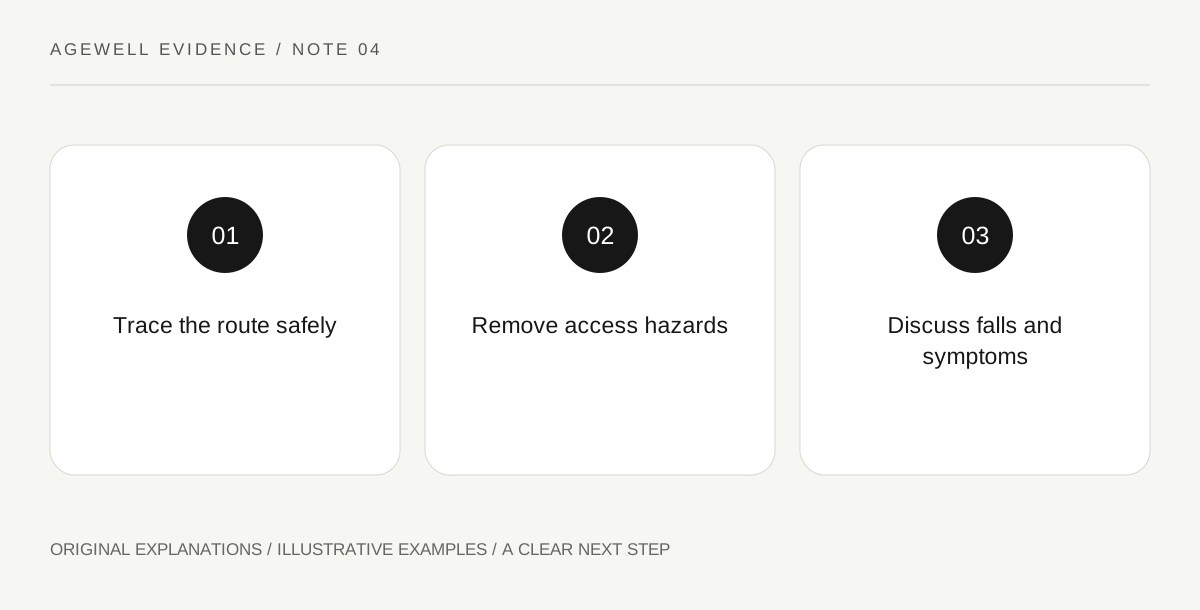
Everyday function3 min read
A nighttime route can become harder when a bag appears beside the bed, light is out of reach or footwear slips. Looking at the route as a sequence reveals practical changes. Home adjustments can reduce hazards, but falls and near-falls also deserve a conversation about health, balance, vision and medicines.
Read the guide ↗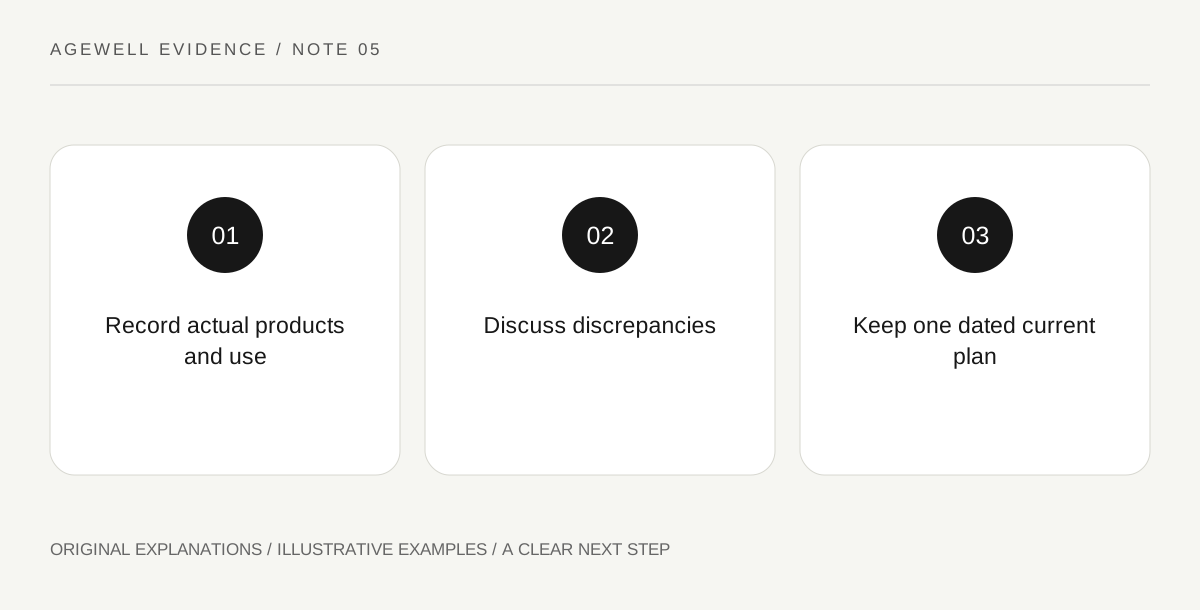
Prevention conversations3 min read
A useful medicine list includes more than prescription names copied from memory. It shows what you actually take, including over-the-counter products and supplements, so a professional can review the whole picture. The purpose is accurate communication; a shorter list is not automatically safer, and this exercise never authorizes stopping treatment.
Read the guide ↗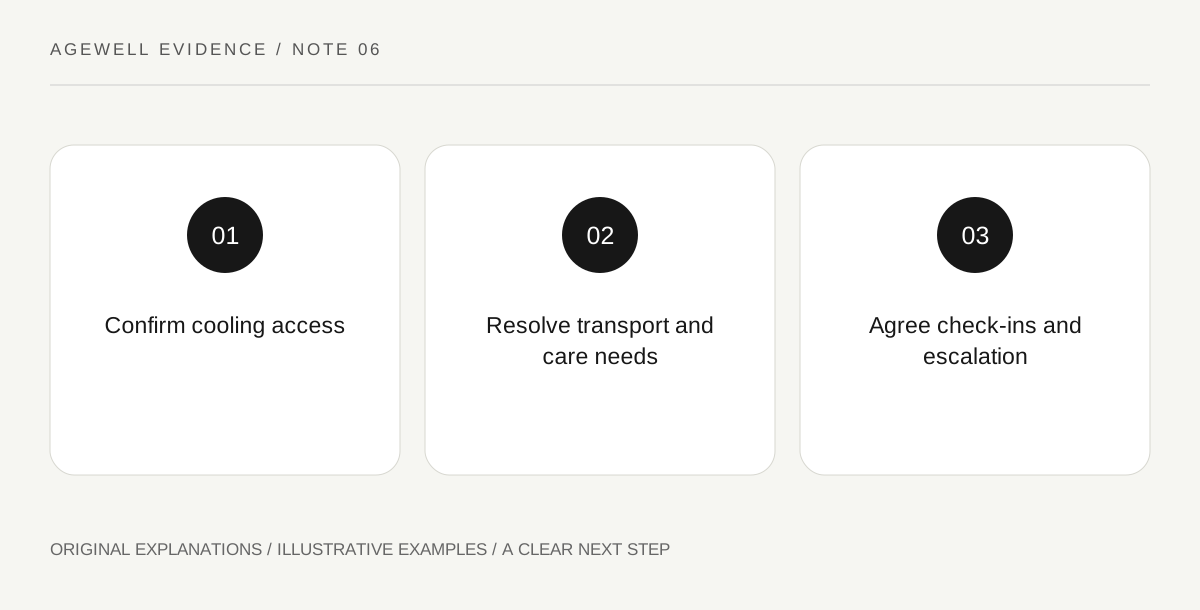
Prevention conversations3 min read
Heat planning works best before a room becomes uncomfortable or transport becomes difficult. Older adults may be more vulnerable because of health conditions, medicines and changes in temperature regulation. A useful plan connects a cool place, a way to reach it and a person who knows when to check in.
Read the guide ↗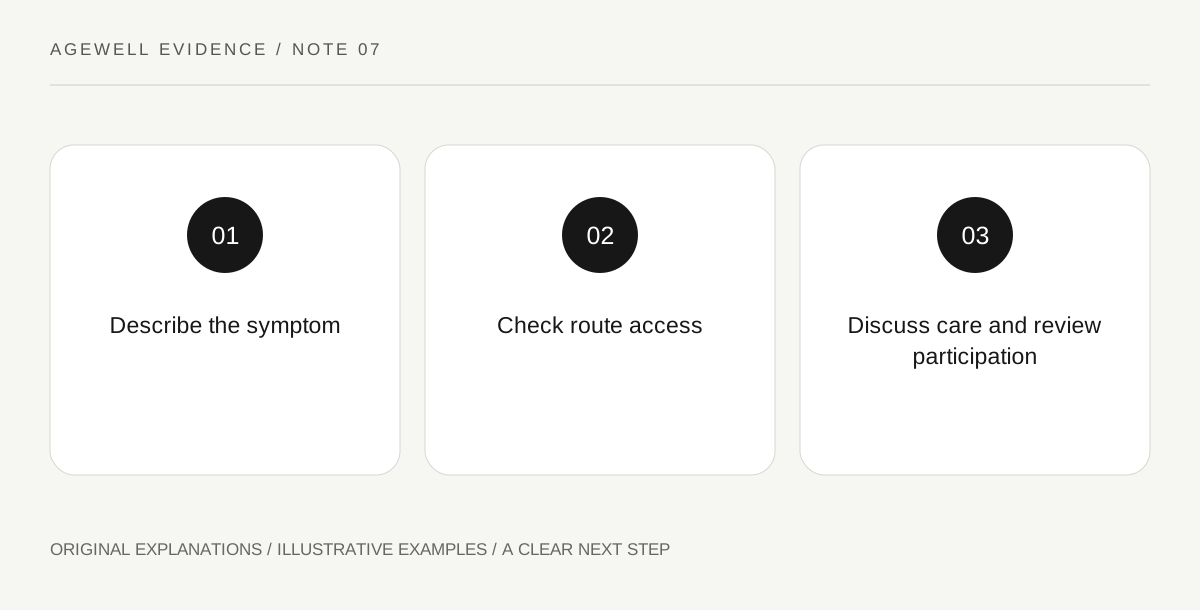
Care and independence3 min read
Repeatedly declining outings because of bathroom worries can make a private symptom into a larger access problem. A practical outing plan may help today, while a health conversation addresses the symptom itself. Leakage and urgency are reasons to seek advice, rather than something everyone must simply accept with age.
Read the guide ↗
Everyday function3 min read
A change in smell can affect appetite and the ability to notice warning odors. It deserves assessment and a practical review of household systems. Replacing smell-based decisions with reliable procedures can help, but no home sniff test establishes why the change happened or whether a food is safe.
Read the guide ↗
Care and independence3 min read
Persistent fatigue is easier to discuss when you describe the activities that changed instead of saying only that you feel older. A short functional account can help a clinician investigate. Fatigue has many possible causes, so an energy supplement or a stricter schedule should not substitute for assessment.
Read the guide ↗
Care and independence3 min read
An occasional forgotten word and repeated difficulty managing familiar tasks are different observations. You do not need to diagnose the difference yourself to ask for help. Concrete examples, a timeline and information about daily function make a memory conversation more useful than either reassurance based on age or an online quiz result.
Read the guide ↗
Research in context3 min read
Improving at a game can be satisfying without proving that everyday memory has improved or that dementia has been prevented. The useful question is what the activity trains and where any benefit was measured. Keeping enjoyment separate from a medical promise helps you choose learning activities with realistic expectations.
Read the guide ↗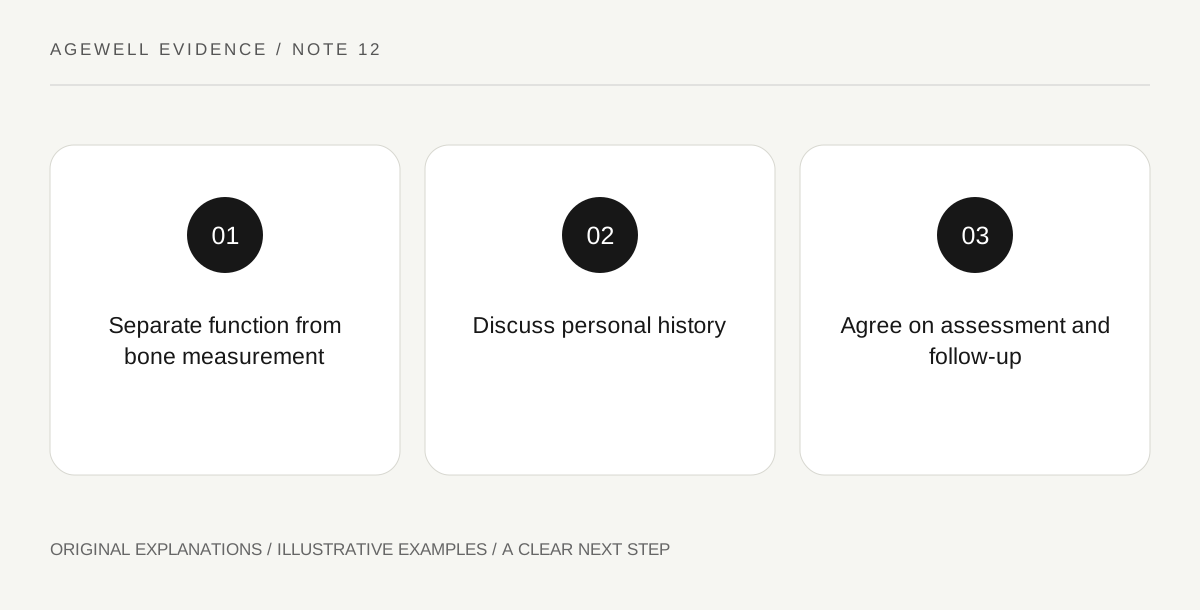
Prevention conversations3 min read
Walking comfortably and having no pain do not establish that bones are strong. Osteoporosis can be silent until a fracture occurs. A useful prevention conversation connects personal history, risk factors and appropriate assessment, while keeping food, activity and any treatment within an individualized plan.
Read the guide ↗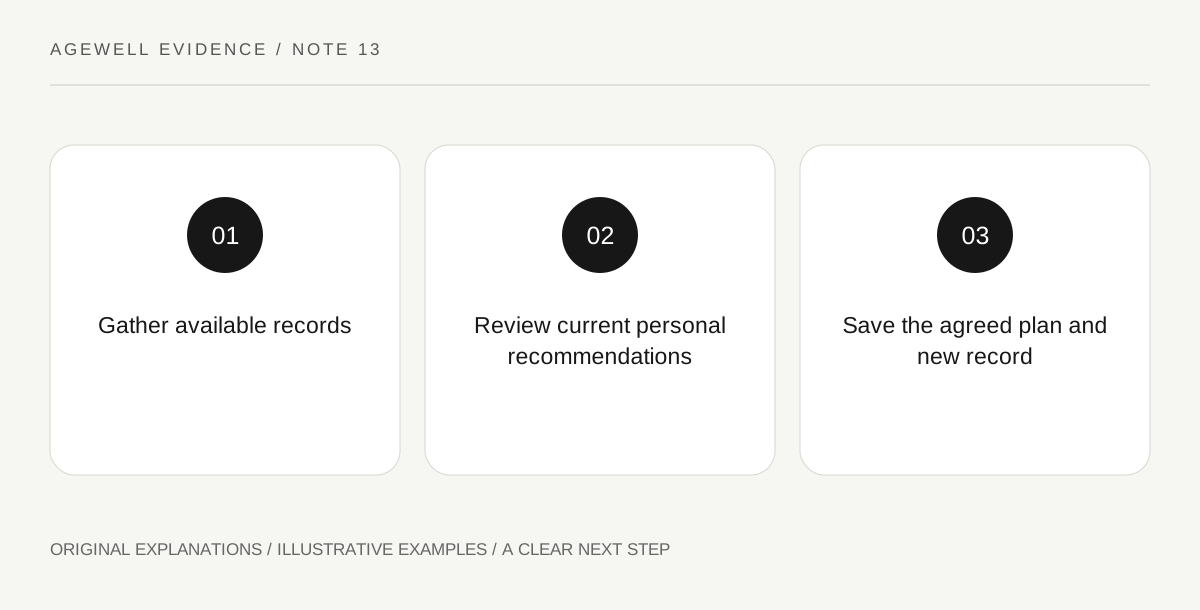
Prevention conversations3 min read
Adult vaccination decisions depend on more than an age milestone. Health conditions, previous doses, travel and changing recommendations can matter. Bringing a clear record makes the conversation more useful and avoids relying on an old checklist. This guide explains preparation rather than prescribing a vaccine schedule.
Read the guide ↗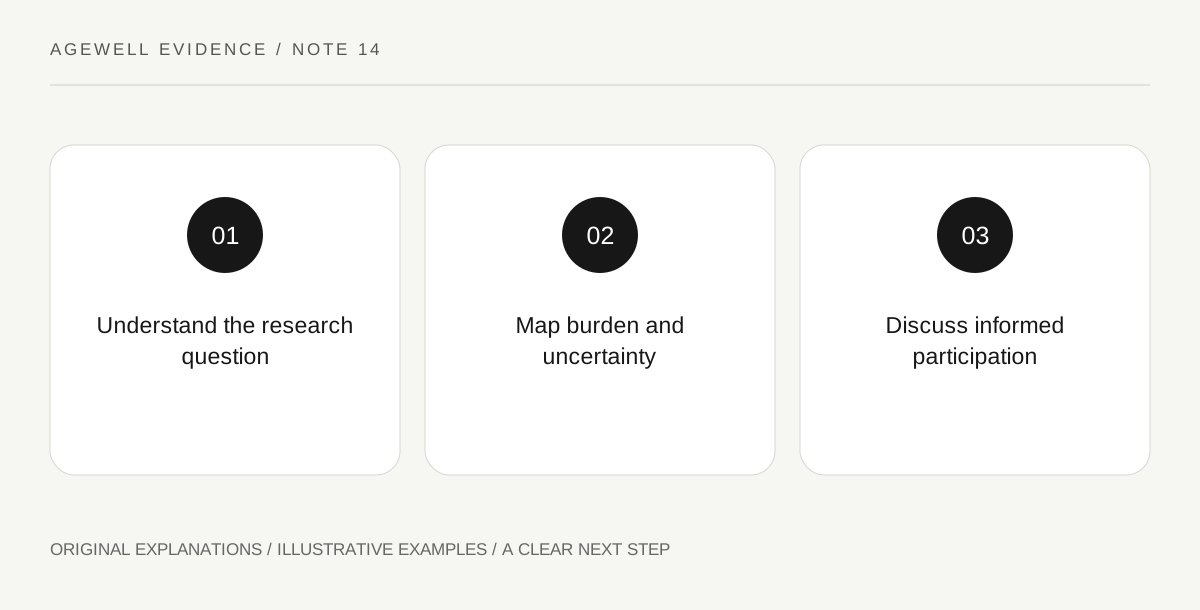
Research in context3 min read
A clinical study can contribute to knowledge while requiring travel, tests, time and uncertainty. Understanding that practical burden is part of informed participation. A study invitation is not a promise of better care or a successful treatment, and ordinary healthcare continues to matter while research is underway.
Read the guide ↗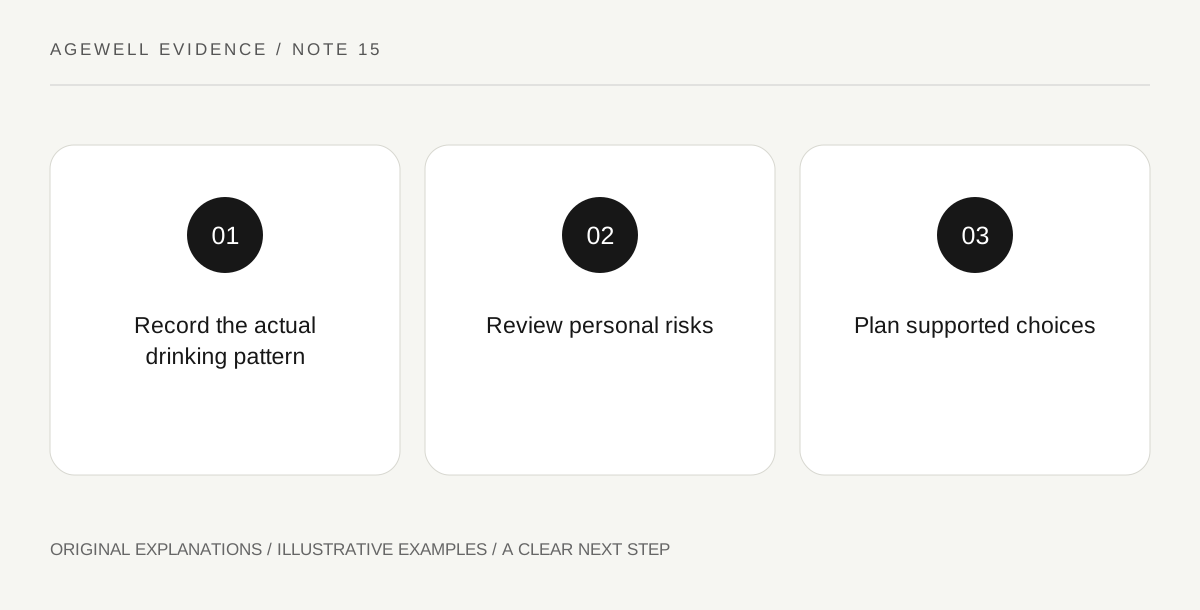
Prevention conversations3 min read
A familiar drinking pattern may need a fresh conversation when health, medicines or daily responsibilities change. The useful question is personal risk and function, rather than whether a particular drink has a wellness reputation. Alcohol is not a healthy-aging treatment, and general guidance cannot determine what is safe for every individual.
Read the guide ↗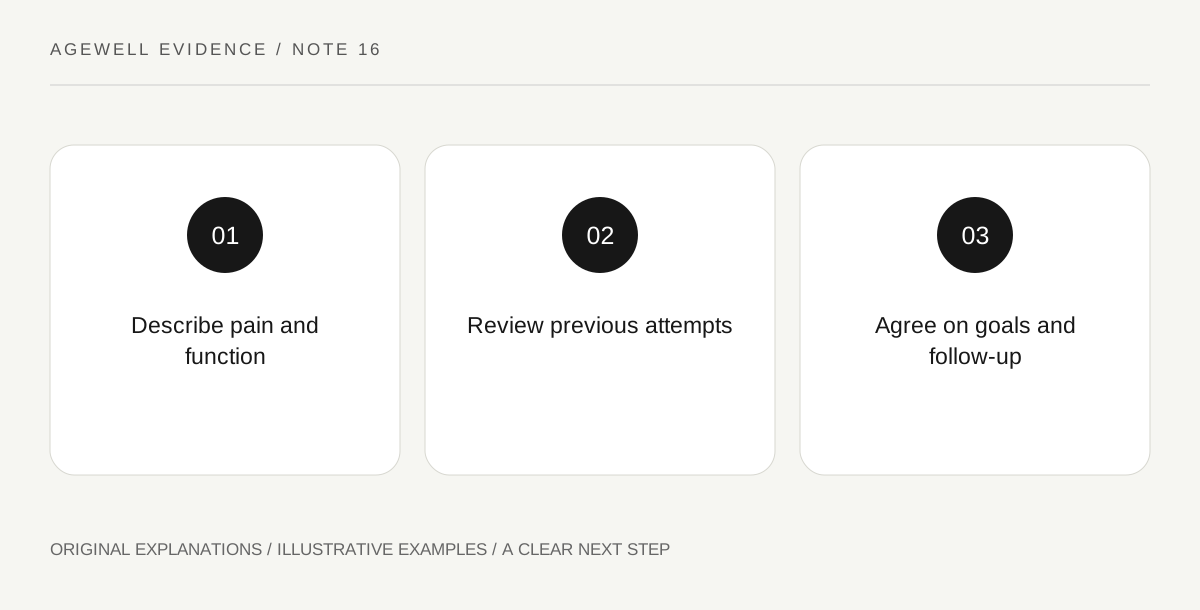
Care and independence3 min read
Pain is easier to discuss when a clinician can understand where it occurs, how it feels and what it prevents you from doing. You do not have to accept persistent pain as a normal feature of getting older. A useful description supports assessment without requiring a self-diagnosis or a treatment chosen online.
Read the guide ↗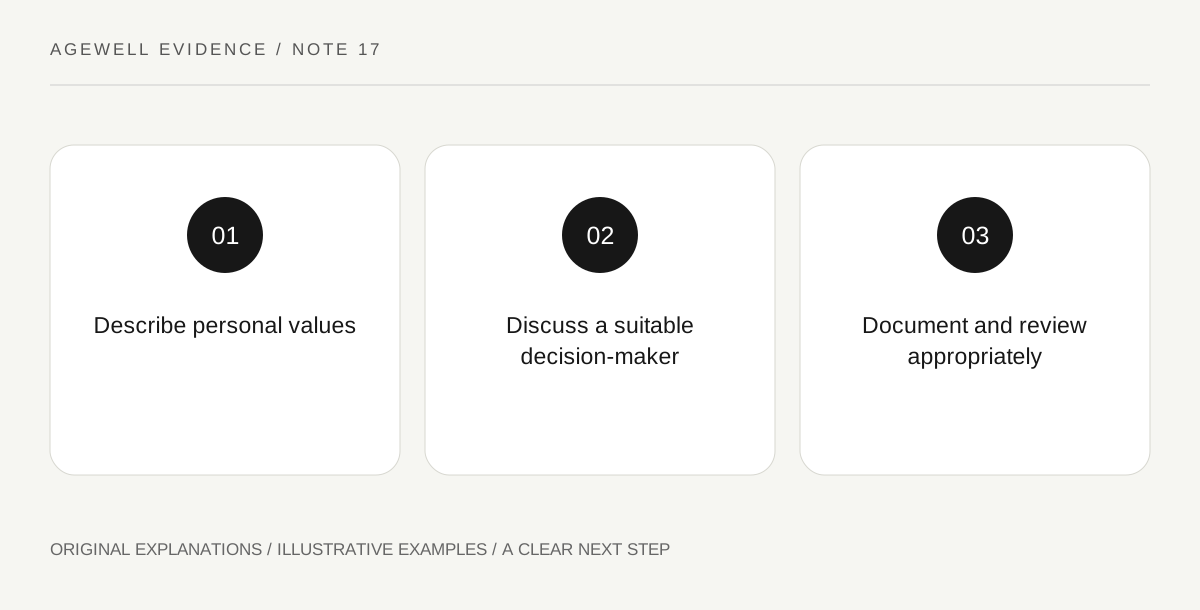
Care and independence3 min read
Advance care planning is easier to begin with a conversation about what matters than with an unexplained stack of forms. It can help others understand your preferences if you cannot communicate later. Documents, decision-maker roles and legal requirements vary, so a values note supports rather than replaces appropriate professional and local guidance.
Read the guide ↗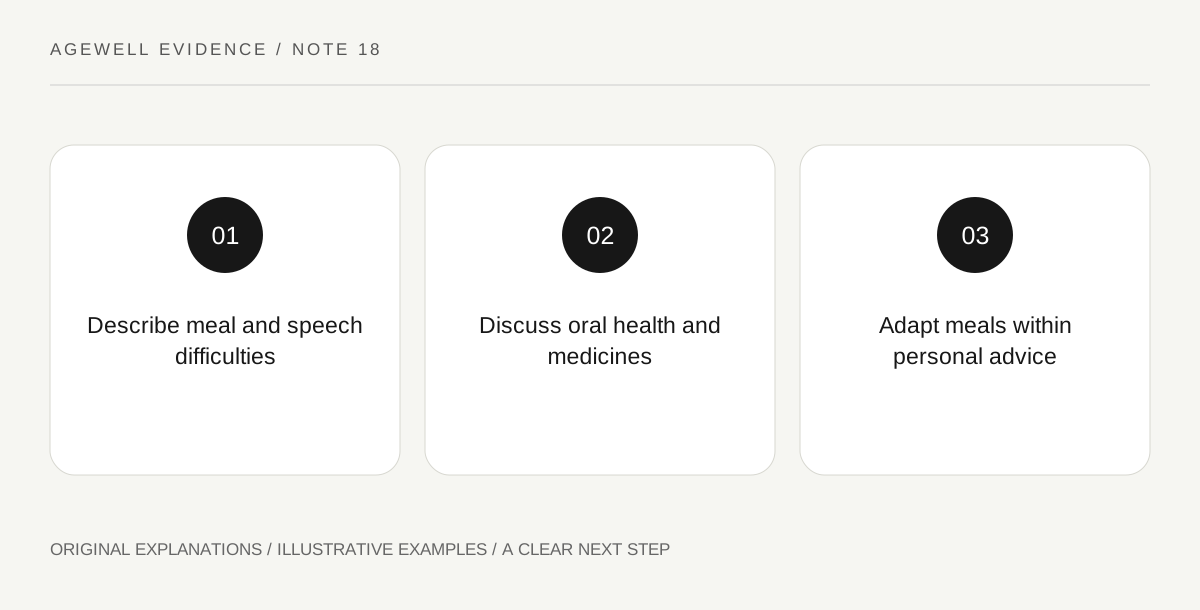
Everyday function3 min read
Dry mouth can change how food feels, how easily you speak and how comfortable eating becomes. It also has oral-health implications, so it deserves more than a new drink bottle. A practical response combines a dental or medical conversation with adjustments that fit your existing dietary and swallowing advice.
Read the guide ↗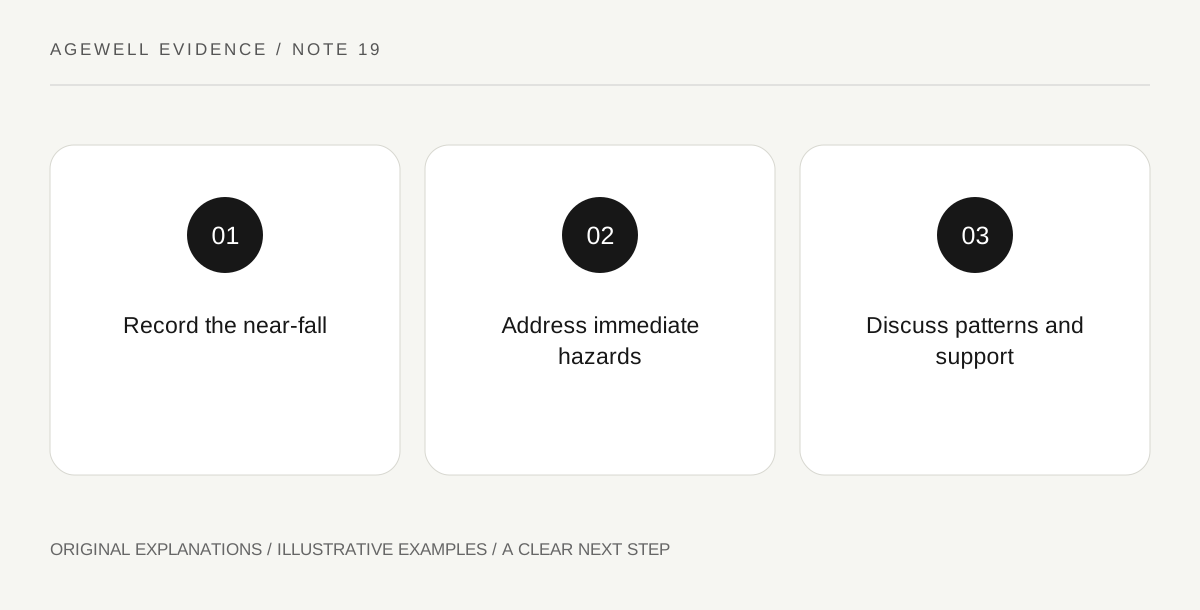
Prevention conversations3 min read
A stumble that ends with grabbing a chair can be easy to dismiss because no injury occurred. It can still reveal a route problem, dizziness or a change in confidence. A concise account helps you address practical hazards and discuss repeated near-falls without turning the incident into a self-test.
Read the guide ↗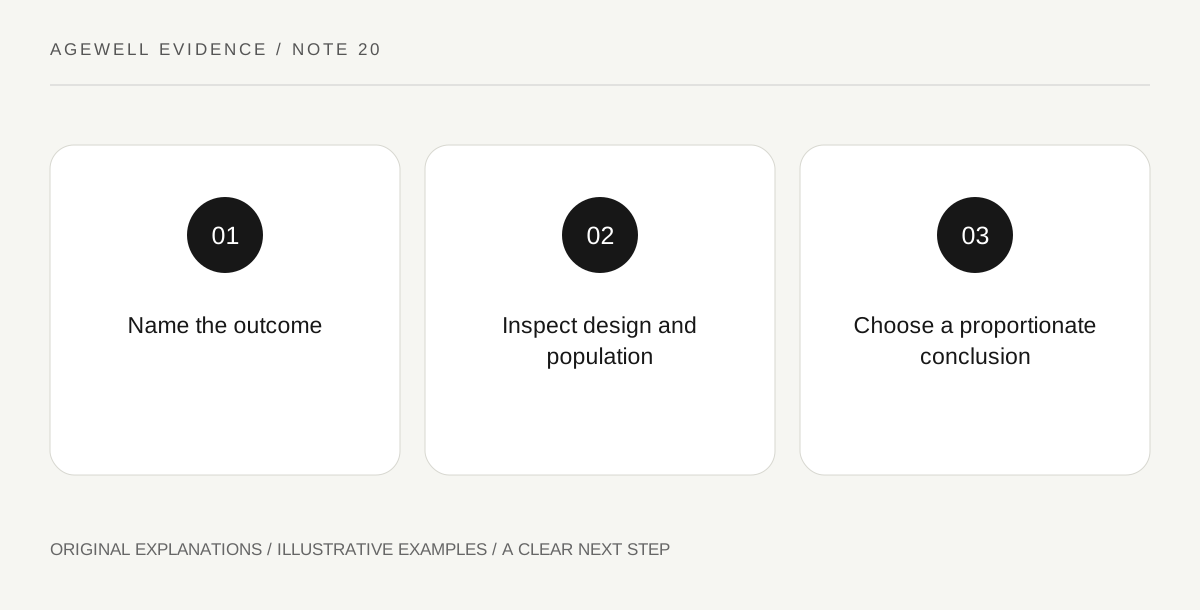
Research in context3 min read
A study can measure a blood marker, a test score, daily function or years of follow-up. Those outcomes answer different questions. Reading the outcome first helps you understand what a healthy-aging finding actually adds, without either dismissing research or expanding a preliminary result into a promise of longer life.
Read the guide ↗